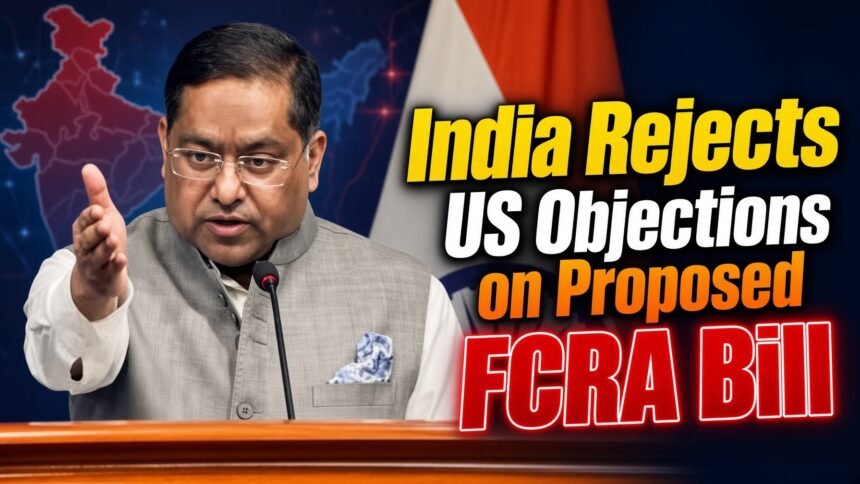
India has firmly rejected objections raised by a US lawmaker over the proposed FCRA Amendment Bill, making it clear that decisions taken by the country’s Parliament are an internal matter.
The Ministry of External Affairs said India’s legislative process is a sovereign domestic issue and that Parliament has the authority to consider and pass laws governing matters within the country. The response comes amid concerns raised in the United States over proposed changes to India’s foreign contribution framework.
The development adds another point of friction to the broader India-US relationship, where trade, technology, defence and diplomatic issues are already closely watched.
What Is the FCRA Amendment Bill?
The Foreign Contribution (Regulation) Act, commonly known as FCRA, regulates the acceptance and use of foreign contributions by individuals, associations and organisations in India.
The law is designed to ensure that foreign funding does not adversely affect India’s:
- National interest
- Internal security
- Political processes
- Public order
- Sovereignty
Organisations receiving foreign contributions are required to comply with regulations governing how those funds are received and used.
The proposed amendment seeks to modify aspects of this existing framework.
Why Did the US Raise Objections?
A US lawmaker raised concerns over the proposed changes, prompting a response from India’s External Affairs Ministry.
The American concerns reportedly relate to the potential impact of India’s foreign-funding regulations on organisations operating with international support.
Foreign funding rules are closely watched by governments and civil society groups because they affect how non-governmental organisations and other entities can receive money from overseas sources.
India, however, has consistently maintained that regulating foreign contributions falls within its sovereign legislative authority.
India’s Response: Parliament’s Decisions Are Internal
The central message from New Delhi is straightforward.
India does not consider its domestic legislative process to be subject to approval or intervention from another country.
The External Affairs Ministry emphasized that Parliament’s legislative decisions are internal matters.
That position reflects a broader principle in international relations: countries retain the sovereign right to frame laws governing activities within their jurisdiction.
For India, the FCRA framework is therefore a domestic regulatory issue rather than a matter requiring external authorization.
Why FCRA Rules Matter to NGOs
FCRA regulations have a direct impact on organisations receiving foreign contributions.
An organisation covered by the law must comply with requirements related to:
- Registration or permission
- Receipt of foreign funds
- Bank accounts
- Financial reporting
- Utilisation of funds
- Compliance and record-keeping
For organisations dependent on overseas donations, changes to these rules can have significant operational consequences.
Stricter compliance requirements can increase administrative costs, while changes in eligibility or permitted activities can affect access to funding.
Why Foreign Funding Is a Sensitive Issue
Foreign contributions can support important activities such as education, healthcare, research, disaster relief and social development.
At the same time, governments around the world regulate foreign funding because of concerns over transparency, political influence and national security.
India’s approach has increasingly emphasized monitoring how foreign contributions enter the country and how recipients use them.
That makes any amendment to the FCRA politically and economically significant.
What Could the Proposed Bill Mean for Organisations?
The eventual impact will depend on the final provisions approved by Parliament.
Organisations receiving foreign contributions will need to closely monitor:
- New compliance requirements
- Eligibility conditions
- Reporting obligations
- Permitted uses of foreign funds
- Registration procedures
- Penalties for violations
For NGOs and other institutions dependent on overseas funding, even relatively technical changes can affect their financial planning.
Why the Dispute Matters for India-US Relations
The disagreement comes at a time when India and the United States are expanding cooperation across multiple sectors.
The two countries have deepening ties in areas including:
- Defence
- Technology
- Artificial intelligence
- Semiconductors
- Trade
- Education
- Energy
At the same time, differences over domestic regulations, trade policy and human-rights-related issues periodically create diplomatic friction.
The FCRA issue is therefore unlikely to be viewed in isolation from the broader relationship.
Sovereignty vs International Concerns
The dispute highlights a familiar tension in international diplomacy.
Foreign governments and lawmakers may raise concerns when domestic legislation affects organisations, companies or citizens connected to their countries.
But the country passing the legislation retains the authority to determine its own legal framework.
India’s response makes that distinction clear: international concerns can be expressed, but the decision to legislate remains with India’s constitutional institutions.
What Happens Next?
The proposed FCRA amendments will continue through India’s legislative process.
The final provisions will determine the practical impact on organisations receiving foreign contributions.
Until the legislation is enacted and detailed rules are issued, organisations should avoid assuming that every proposed change will become part of the final regulatory framework.
Final Thoughts
India’s rejection of US objections to the FCRA Amendment Bill reflects New Delhi’s firm position that Parliament’s legislative decisions are a matter of domestic sovereignty.
The controversy also highlights why foreign funding regulations remain sensitive. India wants greater oversight of overseas contributions, while organisations and international observers continue to watch how those regulations affect legitimate civil-society activity.
The immediate diplomatic disagreement may remain limited, but the larger issue is significant: how India balances national security and regulatory control with the ability of legitimate organisations to access foreign funding.
FAQ
What is the FCRA Amendment Bill?
The proposed legislation seeks to amend India’s Foreign Contribution (Regulation) Act, which governs the receipt and use of foreign contributions by eligible organisations and individuals.
Why did India reject US objections to the FCRA Bill?
India’s External Affairs Ministry said that legislative decisions made by Parliament are internal matters and fall within India’s sovereign constitutional process.
What does FCRA regulate?
FCRA regulates the acceptance, receipt and utilisation of foreign contributions by organisations and other entities covered by the law.
Why are foreign funding rules important for NGOs?
Many NGOs rely on overseas contributions for programmes involving areas such as education, healthcare and social development. FCRA compliance determines how such funding can be received and used.
Has the proposed FCRA Bill become law?
The final legal status and provisions depend on the legislative process. Organisations should rely on official government notifications for the applicable rules.