When a leaf falls from a tree, it doesn’t remain a leaf for long.
It settles into the soil, slowly breaking down and returning its nutrients to the very tree that gave it life. Birds gather fallen twigs to build their nests. Flowers bloom, fade, and nourish the earth for the next season. In nature, nothing is truly wasted. Everything has a purpose. Everything becomes part of another beginning.
Now picture a busy city street.
A plastic bottle tumbles along the pavement, pushed by passing feet. Food wrappers overflow from bins onto the roadside. Rainwater struggles to find its way through drains clogged with discarded packaging. These things don’t return to the earth. They linger. They accumulate. They become someone else’s problem—or everyone’s.
The contrast is striking.
Nature works in circles. We have built a world that often works in straight lines—take, use, throw away.
Somewhere along the way, we stopped asking an important question:
What happens after we’re done with something?
Perhaps an even more important one is:
What happens to us when we stop living as part of nature and begin living apart from it?
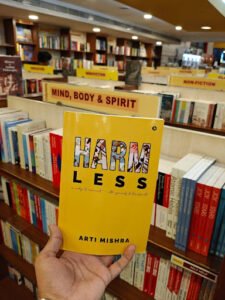
A Lesson I Learnt Long Before I Wrote HARM less
I grew up in rural Madhya Pradesh, where nature wasn’t something we visited on weekends—it was simply life.
Nothing was casually thrown away. Kitchen scraps fed animals or enriched the soil. Old containers found new purpose. Even the mustard oil we cooked with was used for our skin and hair and my. We didn’t call it sustainability; it was simply common sense.
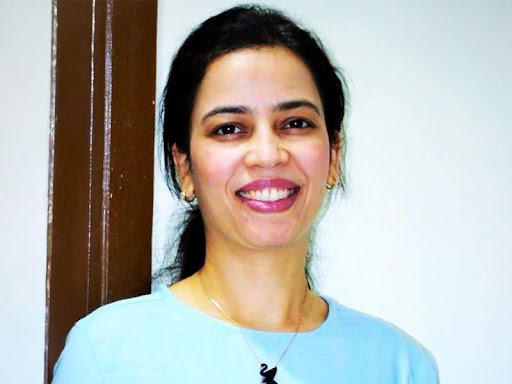
My father, a soldier, taught me discipline and responsibility. My mother, an artist, taught me to notice beauty in ordinary things. Together, they gave me a way of seeing the world that continues to shape me today.
Years later, life became faster.
Supermarket shelves became longer. Products became more convenient. Labels became more complicated. We learnt to compare prices, reviews, and discounts, yet rarely paused to understand what we were putting on our skin, bringing into our homes, or eventually sending back into our own planet.
That observation stayed with me for years.
It wasn’t one moment that inspired HARM less. It was hundreds of small moments that slowly formed one persistent question:
Are we making life easier while unknowingly making it harder on ourselves and the planet?
The Goal Was Never Perfection
For nearly a decade, I carried that question with me.
The answer I eventually found wasn’t about eliminating every harmful choice or returning to an idealised version of the past.
It was “Awareness”
The philosophy behind HARM less can be summed up in one sentence:
“We cannot be harmless, but we definitely can HARM less.”
That sentence isn’t about guilt.
It’s about possibility.
None of us can live without leaving a footprint. But every one of us can choose to leave a lighter one.
The Difference Between Convenience and Conscious Living
Modern life has made almost everything easier.
We replace instead of repairing.
We unwrap more than we reuse.
We buy because it’s quicker than questioning.
Convenience itself isn’t the problem. It has improved our lives in countless ways.
The problem begins when convenience replaces curiosity.
How often do we read the ingredients in the products we use every morning?
How often do we ask where something came from—or where it will go after we’re finished with it?
Not because we don’t care, but because we’ve become too busy to notice.
HARM less isn’t an argument against modern living.
It’s an invitation to become conscious within it.
Maybe that means reading one product label before buying.
Maybe it’s choosing something that lasts longer instead of something disposable.
Maybe it’s growing a few herbs at home, repairing an old item instead of replacing it, or simply pausing before making the next purchase.
Small choices may seem insignificant on their own.
Repeated over years and across millions of people, they shape the kind of world we leave behind.
Nature Continues to Be My Greatest Teacher
When I’m not writing, you’ll usually find me in my garden, in forests, watching birds, or photographing the natural world.
These aren’t escapes from everyday life.
They are reminders of it.
Nature has an extraordinary way of showing us that growth is patient, balance is intentional, and nothing meaningful happens overnight.
It begins with awareness.
Then one decision.
Then another.
A Question Worth Carrying Forward
Nature never wastes a fallen leaf.
Perhaps the next time we reach for something, use something, or throw something away, the better question isn’t simply:
“Where will this go?”
It is:
“Can I do a little less HARM today than I did yesterday?”
For me, that question has become a way of living.
I hope, in some small way, it becomes part of yours too.
To learn more about Arti, her books, and her upcoming projects, visit her official website.