India’s fight against drugs is usually visible through raids, seizures, arrests and the dismantling of trafficking networks. Less visible, but equally important, is the battle to prevent people from becoming drug users in the first place.
It is this second front that Dr Monish Bhalla believes now requires far greater national attention — and substantially greater participation from corporate India.
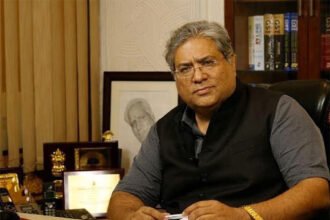
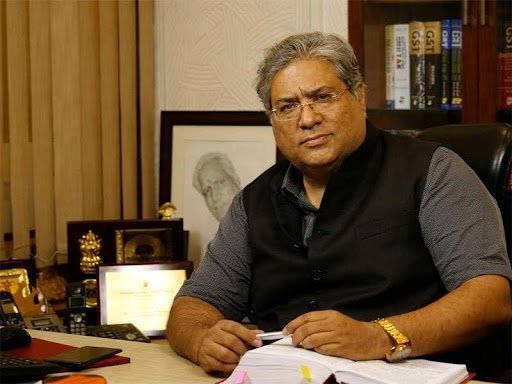
A former officer of the Narcotics Control Bureau, Bhalla has spent decades studying and writing on narcotics, trafficking and drug abuse. He is the author of India Drugged – An Eye Opener and Narco Jihad – When Drugs Fund Terror, and has consistently raised drug-related issues through his writings, research, columns and television discussions. His work has also received acknowledgement from senior public and defence figures, including Uttar Pradesh Chief Minister Yogi Adityanath, Chief of Defence Staff General Anil Chauhan, Chief of the Naval Staff Admiral D. K. Tripathi and Union Minister Dharmendra Pradhan.
Bhalla has been advocating a specific policy proposal: Drug Awareness, Prevention, De-addiction, Treatment, Rehabilitation and After-care should receive explicit recognition within the Corporate Social Responsibility framework under Schedule VII of the Companies Act, 2013, with Nasha Mukt Bharat developed as a clearly identified national CSR priority.
The proposal has a strong existing statutory foundation.
Section 135 of the Companies Act makes Corporate Social Responsibility applicable to companies crossing prescribed financial thresholds and requires eligible companies to spend at least two per cent of their average net profits of the preceding three financial years on CSR activities. Schedule VII identifies the fields in which such expenditure can be undertaken. Among them is “promoting health care including preventive health care.”
The Ministry of Corporate Affairs has also clarified that the entries in Schedule VII are broad-based and should be interpreted liberally. This means appropriately structured projects dealing with substance-abuse prevention, healthcare or rehabilitation may already find space within the existing CSR framework.
But that is precisely where Bhalla wants the policy to go further.
Drug prevention, de-addiction, rehabilitation and after-care are not presently identified by name as a distinct priority in Schedule VII. Explicit recognition, he argues, would give the subject greater visibility and encourage companies to consciously allocate resources towards fighting substance abuse rather than leaving it submerged within the much wider field of healthcare.
There is another important distinction. Simply adding an activity to Schedule VII makes it an identifiable CSR activity; it does not require every company to spend on that particular cause. Bhalla’s larger proposal is therefore to consider an additional policy mechanism through which Nasha Mukt Bharat and drug-demand reduction can become a defined national CSR priority, with meaningful corporate participation encouraged — or, if policymakers consider appropriate, specifically earmarked.
The case for greater participation is compelling.
The Nasha Mukt Bharat Abhiyaan has evolved into a nationwide awareness and community-participation programme, while the National Action Plan for Drug Demand Reduction covers prevention, awareness, treatment, rehabilitation and social reintegration. Government-supported de-addiction and rehabilitation facilities are also functioning across the country.
Bhalla’s argument is not that the Government is doing too little. It is that the scale and changing nature of India’s drug challenge require a much wider societal response.
His central proposition is straightforward: as long as demand remains, supply will continue to find a way.
Law-enforcement agencies can intercept consignments, arrest couriers, dismantle syndicates and block trafficking routes. All of this remains essential. But if the consumer market continues to grow, the enormous profits generated by narcotics will continue to attract new suppliers, new routes and new trafficking methods.
Reducing demand therefore requires sustained investment — not occasional campaigns.
Corporate CSR resources could support professionally designed awareness programmes in schools and universities, counselling and early intervention, treatment infrastructure, rehabilitation centres, training of addiction professionals, research into emerging drug-use patterns, family-support programmes and community outreach.
Equally important is after-care.
A person completing treatment often requires continuing psychological support, vocational training, employment opportunities and social reintegration. Without these, rehabilitation may remain incomplete and the risk of relapse can persist.
Corporate India is particularly well placed to contribute. Companies possess not only financial resources, but managerial capability, technology, communication networks, employment opportunities and experience in implementing large social programmes.
Making Nasha Mukt Bharat a national CSR priority would therefore not replace government responsibility. It would broaden the national coalition fighting the problem.
India needs strong enforcement against those who supply drugs. But it also needs an equally determined national mission to reduce the market that sustains them.
The long-term battle against drugs will not be won by seizures alone. It will be won when prevention, treatment, rehabilitation and after-care become a shared national responsibility — with corporate India standing alongside government, enforcement agencies, families and civil society in that mission.