Delhi Jantar Mantar Protest: 11 Metro Stations Closed as Groups Demand CEC Gyanesh Kumar’s Resignation
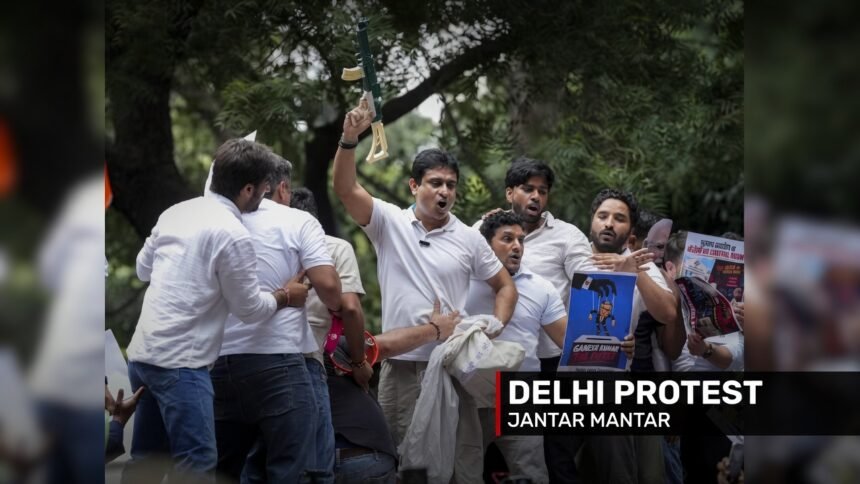
The Delhi Jantar Mantar protest on October 2, 2026, triggered extensive security and movement restrictions in central Delhi as opposition parties, student organisations and other groups gathered to demand the resignation of Chief Election Commissioner (CEC) Gyanesh Kumar.
Delhi Police imposed prohibitory restrictions around the protest area, barricaded access points and suspended mobile internet services within a 1.5-kilometre radius of Jantar Mantar until midnight, according to reports. Entry and exit at 11 Delhi Metro stations were also closed as authorities prepared for the demonstrations.
The protest is linked to criticism of the Election Commission’s Special Intensive Revision (SIR) of electoral rolls and allegations by opposition groups regarding voter deletions and irregularities. The Election Commission has rejected allegations of wrongdoing and has maintained that the revision process is aimed at improving electoral rolls.
Why Is the Delhi Jantar Mantar Protest Taking Place?
The demonstration was organised around demands for accountability from the Election Commission, with participants calling for CEC Gyanesh Kumar to resign.
Political parties and student organisations have raised objections over the Special Intensive Revision (SIR) of electoral rolls. Critics have alleged that the process could result in eligible voters being removed from electoral rolls.
The Election Commission, however, has defended the revision exercise and said its purpose is to identify and remove duplicate, deceased or otherwise ineligible entries while maintaining the integrity of electoral rolls.
The October 2 mobilisation included participation or support from groups including the Aam Aadmi Party, Indian Youth Congress, NSUI, AISA and SFI, among others.
Delhi Police Imposes Restrictions Around Jantar Mantar
Delhi Police imposed restrictions under Section 163 of the Bharatiya Nagarik Suraksha Sanhita (BNSS) in the New Delhi area ahead of the protest.
Police said permission had not been granted for the proposed demonstration and that the restrictions were intended to maintain public order, ensure safety and manage traffic.
According to police statements reported by The Week, unauthorised sit-ins, demonstrations, processions, public speeches and slogan-shouting were prohibited under the restrictions.
Heavy security was deployed around Jantar Mantar, while barricades were installed to regulate access to the area.
Mobile Internet Suspended Near Protest Site
Mobile internet services were suspended within approximately a 1.5-kilometre radius of Jantar Mantar and were scheduled to remain unavailable until midnight on October 2, according to reports.
Authorities cited public safety and maintenance of public order as reasons for the measure.
The suspension came alongside restrictions on movement and increased police deployment around the protest zone.
11 Delhi Metro Stations Close Entry and Exit
One of the most significant effects on commuters was the closure of entry and exit facilities at 11 Metro stations.
The affected stations were:
- Janpath
- Patel Chowk
- Central Secretariat
- Rajiv Chowk
- Seva Teerth
- Mandi House
- Lok Kalyan Marg
- INA
- Chawri Bazar
- Ramakrishna Ashram Marg
- New Delhi
The Delhi Metro Rail Corporation said entry and exit at these stations were closed as a security measure. Metro services themselves were not completely suspended at the affected interchange locations, with interchange facilities continuing at several stations.
The restrictions created additional travel challenges for commuters travelling through central Delhi.
AAP Leaders Detained During Protest
The restrictions did not prevent political leaders and protesters from attempting to reach Jantar Mantar.
AAP Delhi president Saurabh Bharadwaj was detained after reaching the protest area. AAP leader Sanjeev Jha was also detained, while Rajya Sabha MP Sanjay Singh was stopped while attempting to reach the demonstration site, according to reports.
Police said preventive measures were necessary because permission had not been granted for the demonstration.
Later reports said the number of people detained in and around Jantar Mantar rose to more than 500, including AAP leaders and members of student organisations.
Opposition Groups Raise Concerns Over Electoral Rolls
The central political issue behind the demonstrations is the Election Commission’s SIR exercise.
Opposition parties and civil society groups have questioned the manner in which electoral rolls are being revised and have alleged that eligible voters could be removed.
The Election Commission and supporters of the revision process have disputed these allegations, arguing that electoral-roll verification is intended to improve the accuracy of voter lists.
The dispute has consequently become a major point of political debate, with opposition groups seeking greater scrutiny of the process.
Traffic Restrictions Around Central Delhi
The protest also led to traffic restrictions in and around the Jantar Mantar area.
Delhi Traffic Police advised motorists to avoid Jantar Mantar, Parliament Street, Ashoka Road and surrounding roads where possible. Traffic movement around Connaught Place, Patel Chowk, GPO and Tolstoy Marg was also regulated or diverted.
Commuters were advised to plan alternative routes because of the security deployment and expected gatherings.
Security Deployment Increased
Authorities deployed additional Delhi Police personnel and Central Armed Police Forces around Jantar Mantar and other sensitive locations in central Delhi.
Reports indicated that thousands of people were expected to participate in the demonstration, prompting additional security arrangements and barricading around the protest site.
The restrictions were part of a broader effort by authorities to prevent unauthorised gatherings and manage movement in a heavily trafficked part of the capital.
What Happens Next?
The protests are part of a broader series of demonstrations over the Election Commission’s handling of electoral-roll revisions.
The INDIA bloc has announced a series of “Save Democracy” marches from October 2 to 8, while opposition MPs are scheduled to march to the Election Commission on October 6, according to reports.
The Election Commission’s response to the allegations and the continuation of the SIR exercise are expected to remain important issues in the political debate.
For commuters, the immediate impact has been concentrated around central Delhi, with Metro access, mobile connectivity and traffic movement affected by the security measures.
FAQs
1. Why is the Delhi Jantar Mantar protest taking place?
The protest is being held by opposition parties, student organisations and other groups demanding the resignation of CEC Gyanesh Kumar and raising concerns about the Special Intensive Revision of electoral rolls.
2. How many Delhi Metro stations were closed?
Entry and exit were closed at 11 Metro stations in connection with the security arrangements around Jantar Mantar.
3. Which Metro stations were affected?
The affected stations included Janpath, Patel Chowk, Central Secretariat, Rajiv Chowk, Seva Teerth, Mandi House, Lok Kalyan Marg, INA, Chawri Bazar, Ramakrishna Ashram Marg and New Delhi.
4. Was Delhi Metro completely suspended?
No. Entry and exit were closed at the 11 affected stations, but Metro services and interchange facilities continued at selected stations.
5. Was mobile internet suspended?
Yes. Reports said mobile internet services were suspended within a 1.5-kilometre radius of Jantar Mantar until midnight on October 2.
6. Why are protesters demanding Gyanesh Kumar’s resignation?
Protesters have raised allegations concerning the Special Intensive Revision of electoral rolls and alleged deletion of eligible voters. These are allegations made by protesters and opposition groups; the Election Commission has defended the revision process.
7. Were any political leaders detained?
Yes. AAP Delhi president Saurabh Bharadwaj and AAP leader Sanjeev Jha were detained, while AAP Rajya Sabha MP Sanjay Singh was stopped while attempting to reach the protest area.
8. What restrictions did Delhi Police impose?
Section 163 of the BNSS was imposed in the relevant area, restricting unauthorised gatherings and demonstrations. Police also deployed additional personnel and installed barricades.
9. Were traffic restrictions also imposed?
Yes. Traffic movement was regulated or diverted around Jantar Mantar, Parliament Street, Ashoka Road, Tolstoy Marg and other nearby routes.
10. What is the Special Intensive Revision?
The Special Intensive Revision, or SIR, is an Election Commission exercise to verify and revise electoral rolls. The process has become the subject of political and legal controversy over concerns about voter deletions and documentation requirements.