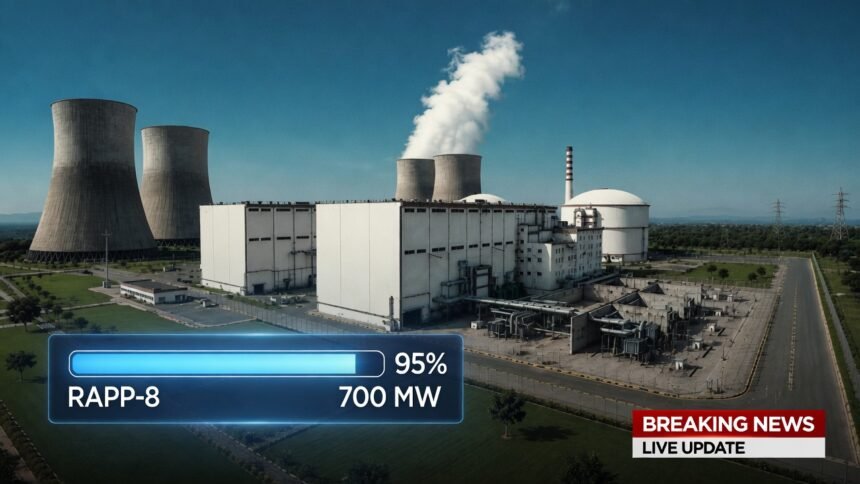
NPCIL Begins Fuel Loading at RAPP-8, 700 MW Nuclear Reactor Moves Closer to Operation
India’s nuclear power programme has reached another important milestone with the RAPP-8 fuel loading process beginning at the Rajasthan Atomic Power Project in Rawatbhata, Rajasthan. Nuclear Power Corporation of India Limited (NPCIL) has started initial fuel loading at Unit 8, moving the 700 MW indigenous reactor into a crucial stage of its commissioning process.
The reactor is an indigenous Pressurised Heavy Water Reactor (PHWR) designed for a capacity of 700 megawatts electric (MWe). NPCIL expects the unit to commence commercial operations during the current financial year, subject to the completion of the remaining regulatory and commissioning stages.
The development comes as India continues to expand nuclear generation as part of its broader effort to build a reliable electricity system with a larger share of low-carbon sources.
RAPP-8 Begins Initial Fuel Loading
Initial fuel loading is one of the major stages in bringing a nuclear reactor toward operation.
NPCIL has commenced loading nuclear fuel into RAPP-8, marking the transition from construction and system commissioning toward the reactor’s operational stages. The process follows extensive testing, system checks and regulatory clearances required before fuel can be loaded.
RAPP-8 is the second unit of the RAPP-7&8 project at Rawatbhata. Both units are based on India’s indigenous 700 MW PHWR design.
The start of fuel loading puts Unit 8 closer to the next stages of commissioning, including achieving initial criticality, conducting power-raising tests and eventually beginning commercial electricity generation.
RAPP-8 Is a 700 MW Indigenous Nuclear Reactor
RAPP-8 has a planned generation capacity of 700 MW and uses India’s indigenous PHWR technology.
The reactor forms part of the country’s programme to deploy standardised 700 MW PHWR units at multiple locations. The design is intended to provide a larger standardised reactor format as India expands its domestic nuclear generation capacity.
The government had previously reported that RAPP-8 was in an advanced stage of commissioning, with the unit expected to become operational during 2026. As of June 2026, the project’s reported physical progress stood at 96.26%.
What Happens After Fuel Loading?
Fuel loading does not mean that RAPP-8 immediately begins commercial electricity generation.
Several important commissioning stages remain after fuel is loaded.
The next major milestone is expected to be the First Approach to Criticality (FAC), when the reactor is brought to a controlled nuclear chain reaction under regulatory oversight. This will be followed by the gradual increase of reactor power and testing of the plant’s systems at different operating levels.
After completing the required commissioning and regulatory procedures, the reactor can move toward commercial operation.
Reports indicate that the process from initial fuel loading to commercial operation typically takes around six to eight months, although the exact timeline depends on testing, regulatory approvals and commissioning requirements.
RAPP-7 Already Entered Commercial Operation
RAPP-8 is being developed alongside RAPP-7, another 700 MW reactor at the same Rajasthan site.
RAPP-7 commenced commercial operation on April 15, 2026, according to government data. Its commissioning marked an important step in the deployment of India’s indigenous 700 MW reactor technology.
With RAPP-7 already operating commercially, the progress of RAPP-8 will further increase the nuclear generation capacity available from the Rawatbhata site.
The two units together represent a planned 1,400 MW of generating capacity.
Why the RAPP-8 Project Matters
The commissioning of another 700 MW indigenous reactor is significant for India’s long-term nuclear expansion plans.
Nuclear power can provide continuous electricity generation and can complement variable renewable sources such as solar and wind. India is therefore pursuing nuclear capacity expansion alongside rapid additions in renewable energy and other forms of electricity generation.
The government reported that India’s installed nuclear power capacity stood at 8,780 MW, comprising 24 nuclear power reactors, as of July 2026. Nuclear generation accounted for about 3.1% of total electricity generation in 2025-26.
The addition of new indigenous reactors is expected to gradually increase nuclear power’s contribution to the country’s electricity mix.
NPCIL’s Role in India’s Nuclear Expansion
NPCIL is responsible for the design, construction, commissioning, operation and upgrading of nuclear power reactors in India.
According to the company, it currently operates 24 nuclear power reactors with an installed capacity of 8,780 MW, excluding Rajasthan Atomic Power Station Unit-1, which is owned by the Department of Atomic Energy and under long shutdown.
NPCIL is also constructing several reactors, including RAPP-8, the two Kudankulam units under construction, and the Gorakhpur Haryana Anu Vidyut Pariyojana units.
The company says that with progressive completion of its planned projects, its installed capacity is envisaged to reach 21,980 MW by 2031-32.
India’s Standardised 700 MW PHWR Programme
RAPP-8 is part of a broader programme involving India’s indigenous 700 MW PHWR technology.
The government has been developing multiple reactors based on this standardised design as part of its strategy to expand domestic nuclear power generation.
Other projects include the Gorakhpur Haryana Anu Vidyut Pariyojana in Haryana and future units at sites such as Kaiga in Karnataka.
The standardisation of reactor designs can support repeat deployment by allowing engineering, construction and operational experience from one project to inform subsequent projects.
Nuclear Power and India’s Clean Energy Strategy
India’s energy strategy includes a combination of renewable energy, nuclear power and other sources to meet rising electricity demand.
At the G20 Energy Abundance Working Group meetings in September 2026, the Ministry of Power highlighted India’s progress in building a secure and resilient energy system, including an installed electricity capacity of 552 GW and a non-fossil share exceeding 50%. The ministry also highlighted advances in solar power, storage and nuclear energy.
Nuclear power occupies a different role from intermittent renewable sources because nuclear reactors are designed for continuous electricity generation.
The expansion of nuclear capacity can therefore provide another source of low-carbon electricity while India continues to increase solar, wind and energy-storage capacity.
RAPP-8 Construction and Commissioning Progress
The RAPP-8 project has taken several years to reach the fuel-loading stage.
Government data published in July 2026 showed the project at 96.26% physical progress as of June 2026 and described it as being in an advanced stage of commissioning.
The project is now moving through the final sequence of activities required before commercial operation.
Fuel loading is therefore an important transition point, but the reactor still has to complete the necessary commissioning and regulatory procedures before it can be declared commercially operational.
Rawatbhata’s Importance to India’s Nuclear Programme
Rawatbhata in Rajasthan has been an important location in India’s nuclear power programme for decades.
The Rajasthan Atomic Power Project has hosted multiple reactor units, and the addition of RAPP-7 and RAPP-8 represents the deployment of India’s newer 700 MW PHWR design at the site.
With RAPP-7 already commercially operational and RAPP-8 now undergoing fuel loading, the two units are expected to substantially strengthen the site’s electricity-generating capacity.
The project also provides another operating reference point for India’s indigenous 700 MW reactor programme.
What the RAPP-8 Milestone Means for India’s Power Sector
The beginning of fuel loading brings RAPP-8 closer to contributing electricity to the national grid.
Once commercial operation begins, the reactor will add up to 700 MW of installed nuclear capacity to India’s power system.
The development also demonstrates progress in India’s domestic nuclear technology programme, particularly the deployment of larger indigenous PHWR units.
However, the reactor’s contribution to electricity generation will begin only after the completion of the remaining commissioning stages and regulatory requirements.
What Happens Next?
Following the start of initial fuel loading, RAPP-8 will proceed through the remaining commissioning sequence.
The reactor is expected to undergo the First Approach to Criticality, followed by controlled power escalation and testing of various systems before moving toward commercial operation.
NPCIL has indicated that the unit is targeted for commercial operation during the current financial year, FY2026-27.
The exact date of commercial operation will depend on the successful completion of commissioning activities and the necessary regulatory clearances.
Looking Ahead
The RAPP-8 fuel loading milestone marks a major stage in India’s indigenous nuclear power programme.
The 700 MW reactor at Rawatbhata has moved beyond the construction phase and into the final stages leading toward operation. With RAPP-7 already commercially generating electricity, the commissioning of RAPP-8 would further expand the nuclear capacity of the Rajasthan site.
More broadly, the project forms part of India’s effort to expand nuclear generation through standardised indigenous PHWR technology. NPCIL is simultaneously progressing with other nuclear projects as the country seeks to increase reliable, low-carbon electricity generation.
If RAPP-8 completes its commissioning process as planned, its entry into commercial operation during FY2026-27 will represent another addition to India’s growing nuclear power fleet.
Frequently Asked Questions
1. What is RAPP-8?
RAPP-8 is Unit 8 of the Rajasthan Atomic Power Project at Rawatbhata, Rajasthan. It is a 700 MW indigenous Pressurised Heavy Water Reactor being developed by NPCIL.
2. Has fuel loading started at RAPP-8?
Yes. NPCIL has commenced initial fuel loading at RAPP-8, marking an important stage in the reactor’s commissioning process.
3. What is the capacity of RAPP-8?
RAPP-8 has a planned capacity of 700 MW electric (MWe).
4. Where is RAPP-8 located?
The reactor is located at Rawatbhata in Rajasthan as part of the Rajasthan Atomic Power Project.
5. What type of reactor is RAPP-8?
RAPP-8 is an indigenous 700 MW Pressurised Heavy Water Reactor (PHWR).
6. Is RAPP-8 already generating commercial electricity?
No. Fuel loading is an important commissioning milestone, but the reactor must still complete criticality, power-raising, testing and regulatory procedures before commercial operation.
7. When is RAPP-8 expected to become operational?
NPCIL expects RAPP-8 to commence commercial operation during FY2026-27, subject to completion of commissioning and regulatory requirements.
8. Is RAPP-7 already operational?
Yes. RAPP-7, the other 700 MW unit in the RAPP-7&8 project, commenced commercial operation on April 15, 2026.
9. How much nuclear capacity does NPCIL currently operate?
NPCIL states that it operates 24 nuclear power reactors with an installed capacity of 8,780 MW, excluding Rajasthan Atomic Power Station Unit-1.
10. Why is RAPP-8 important for India?
RAPP-8 is part of India’s programme to expand nuclear electricity generation using indigenous 700 MW PHWR technology. Its commissioning would add another 700 MW of nuclear capacity and support the country’s broader effort to diversify its low-carbon electricity sources.