India Explores Xinjiang Air Route as Pakistan Airspace Closure Raises Flight Costs
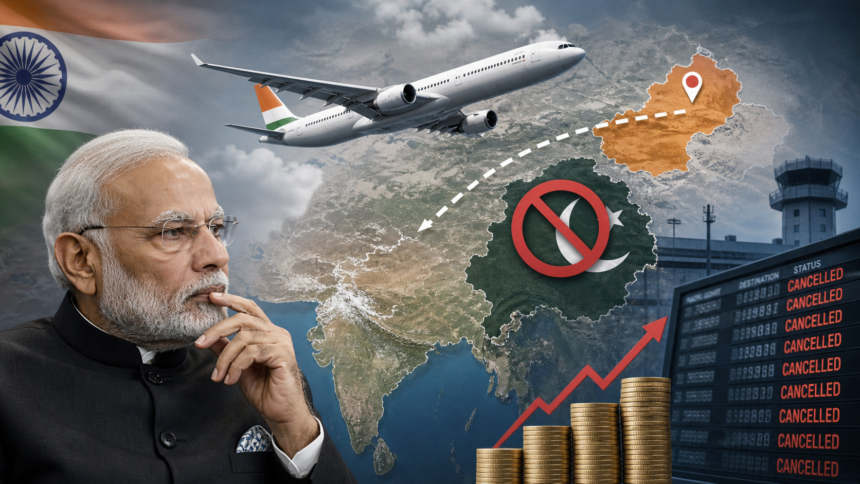
The India Xinjiang air route is being explored as a possible alternative for Indian airlines affected by the continued closure of Pakistani airspace. Civil Aviation Minister Ram Mohan Naidu said discussions are underway with China over a potential corridor through Hotan in southwestern Xinjiang.
The proposed route could provide Indian carriers with a shorter option for some westbound international flights, reducing the additional flying time, fuel consumption and operating costs caused by the current detours around Pakistan.
However, the route remains under discussion and no agreement has been reached with China yet.
India-China Talks Underway Over Hotan Route
According to Civil Aviation Minister Ram Mohan Naidu, the Ministry of External Affairs is engaging with China regarding the proposed Hotan route. The discussions have reportedly been underway for more than a year.
Naidu said India is examining alternative airspace options and specifically mentioned the Hotan corridor as one possibility.
If approved, the route could allow flights departing from northern and western India to enter Chinese airspace near Hotan before continuing toward Central Asia and connecting with existing routes to Europe, the UK and North America.
The proposal is still at the discussion stage, and its final routing, operational requirements and possible launch date have not been announced.
Why India Needs an Alternative to Pakistani Airspace
Pakistan closed its airspace to Indian-registered and Indian-operated aircraft in April 2025 following the Pahalgam terror attack. Since then, Indian airlines operating several westbound international services have had to take longer routes to avoid Pakistani airspace.
Flights from northern and western India to Europe and North America have in several cases been routed over the Arabian Sea and toward Oman before continuing westward.
The additional routing has increased flight times, fuel consumption and other operating expenses. Reports indicate that some flights have faced an additional 45 minutes to two hours of flying time.
How the Proposed Xinjiang Route Could Work
Under the route being discussed, flights from cities such as Delhi and Mumbai could travel toward Leh before entering Chinese airspace near Hotan.
From there, aircraft could potentially travel toward Kyrgyzstan and connect with existing international routes.
The exact path would depend on the airspace access and routing conditions eventually agreed upon by India and China. The proposal could be particularly relevant for services connecting India with destinations in Central Asia, the Caucasus and northern Europe.
The proposed corridor is therefore not simply a replacement for one existing flight path. It would require coordination between aviation authorities, airlines and air traffic management agencies in the countries involved.
Potential Savings for Indian Airlines
The primary objective of the India Xinjiang air route would be to reduce the additional costs associated with the Pakistan airspace closure.
Indian carriers currently using longer routes consume more aviation fuel and spend additional time in the air. Longer flights can also increase costs related to aircraft utilisation, crew scheduling and other operations.
A shorter route through Xinjiang could potentially reduce some of these expenses, although the actual savings would depend on the final route, applicable air navigation charges and the number of flights permitted to use the corridor.
Reports have specifically highlighted potential benefits for routes serving destinations such as Georgia, Baku, Central Asia and northern Europe.
Air India Has Faced Significant Financial Pressure
The prolonged closure has been particularly significant for Air India because the airline operates a large number of long-haul services from its Delhi and Mumbai hubs.
Former Air India CEO Campbell Wilson estimated in 2025 that the airline could face losses of around ₹4,000 crore because of the Pakistani airspace restrictions. That figure was an estimate rather than a current government assessment.
The impact varies depending on the aircraft, destination, flight path and prevailing fuel prices.
Route Still Requires China’s Approval
Despite the potential benefits, the proposed corridor cannot become operational without an agreement between India and China.
The two countries would need to coordinate on airspace access, approved routes, air traffic management and other operational requirements. Minister Naidu has not announced a timeline for when such an agreement could be reached.
India Today also reported that discussions have been ongoing but that there is currently no agreement allowing Indian airlines to use the proposed route.
For now, Indian airlines continue to use alternative routes around Pakistani airspace.
India Looks at Wider Aviation Connectivity
The Xinjiang proposal comes as India continues to expand its international aviation network.
The government has been working on additional international routes and restoring connectivity with several countries. The Civil Aviation Ministry’s annual report notes that bilateral engagement with China helped resolve operational issues and supported the resumption of direct air services between the two countries.
India is also scheduled to host Routes Asia 2027 in Delhi from March 16 to 18, with the government looking to use the event to discuss international and regional connectivity opportunities.
The proposed Hotan corridor could therefore become part of India’s broader effort to develop additional international aviation options.
What Happens Next?
The immediate focus is on diplomatic and technical discussions between India and China.
If China agrees to provide the required airspace access, aviation authorities would still need to determine the exact route and operational conditions before airlines could begin using it.
Until then, the India Xinjiang air route remains a proposal rather than an operational alternative.
For Indian airlines, however, the discussions highlight the search for ways to reduce the financial and operational impact of the prolonged Pakistan airspace closure.
FAQs
1. What is the India Xinjiang air route?
It is a proposed alternative air corridor that could allow Indian airlines to fly through China’s Xinjiang region instead of taking longer routes around Pakistani airspace.
2. Which Xinjiang route is being discussed?
The proposed corridor is centered around Hotan, in southwestern Xinjiang.
3. Why is India exploring this route?
India is exploring the route to reduce additional flying time, fuel consumption and operating costs caused by the continued closure of Pakistani airspace to Indian aircraft.
4. Has China approved the proposed route?
No. Discussions between India and China are ongoing, and no final agreement has been announced.
5. Which Indian cities could potentially benefit?
Reports indicate that flights from major northern and western hubs, including Delhi and Mumbai, could potentially use the route if approved.
6. How much additional flying time has the Pakistan airspace closure caused?
Depending on the route, Indian airlines have faced approximately 45 minutes to two hours of additional flying time on some international services.
7. Which destinations could benefit from the Hotan route?
Potential destinations mentioned in reports include parts of Central Asia, Georgia, Baku and northern Europe. The actual benefits would depend on the final route approved by aviation authorities.
8. When did Pakistan close its airspace to Indian aircraft?
Pakistan closed its airspace to Indian-registered and Indian-operated aircraft in April 2025 following the Pahalgam terror attack.
9. Has India stopped using routes around Pakistan?
No. Indian airlines continue to use alternative routes while discussions over additional options, including the Xinjiang corridor, continue.
10. When could the Xinjiang route become operational?
There is currently no announced launch date. The route would require an agreement between India and China as well as technical and air traffic management coordination before operations could begin.