In the business world, speed is often celebrated.
Leaders are expected to make quick decisions, move fast, and act with confidence. The image of a successful leader is usually someone who knows exactly what to do and does it without hesitation.
But according to Singapore-based technology leader and author Ankit Rao, reality is rarely that simple.
After years of leading teams and solving complex problems in the tech industry, Rao has come to believe that some of the qualities often labeled as “overthinking” can actually become valuable leadership strengths when used wisely.
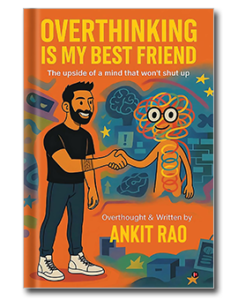
His debut book, Overthinking Is My Best Friend, explores this idea through personal stories, professional experiences, and reflections on the way our minds process uncertainty.
Leadership Begins Where Certainty Ends
One of the biggest lessons Rao learned during his career is that leadership often means making decisions without having all the answers.
Technology teams deal with changing priorities, shifting customer needs, unexpected challenges, and incomplete information. In such situations, there is rarely a clear path forward.
“The assumption is that leaders always know what to do,” says Rao. “In reality, leadership often means moving ahead while still carrying doubts and questions.“
Rather than viewing thoughtful questioning as a weakness, he sees it as an important part of responsible decision-making.
The ability to examine different possibilities, identify risks, and think through consequences can often lead to stronger outcomes.
Knowing When to Think and When to Decide
Of course, not all overthinking is productive.
There is a point where analysis can become paralysis. Decisions get delayed, opportunities pass, and anxiety takes over.
The challenge, according to Rao, is learning where reflection ends and avoidance begins.
Effective leaders do not ignore uncertainty. They acknowledge it, gather what information they can, and make the best decision available at that moment.
This balance between careful thinking and decisive action is something many professionals spend years trying to develop.
The Power of Knowing Your Blind Spots
Beyond decision-making, Rao believes overthinkers often possess another valuable quality: self-awareness.
People who spend time examining their thoughts tend to pay closer attention to their reactions, assumptions, and blind spots. This can help them become better communicators and more thoughtful leaders.
In team environments, self-awareness can improve trust, reduce unnecessary conflict, and create space for more meaningful conversations.
It also encourages leaders to ask an important question that is often overlooked: “What might I be missing?”
That question alone can prevent costly mistakes.
The Missing Side of the Success Conversation
Many business books focus on productivity, performance, and winning.
Rao’s perspective is slightly different.
Through Overthinking Is My Best Friend, he argues that success is not simply about moving faster. Sometimes it is about understanding how your mind works and using that awareness to make better choices.
The book does not encourage endless analysis. Instead, it encourages readers to stop treating every doubt, question, or mental loop as a flaw.
In many cases, those moments of reflection are what help people grow, adapt, and lead more effectively.
The Competitive Advantage of Thinking Deeply
In an age of constant notifications, instant opinions, and pressure to react quickly, deep thinking can feel unfashionable.
Yet some of the most important decisions in business and life still require patience, reflection, and careful consideration.
For Ankit Rao, the goal is not to eliminate overthinking entirely. It is to understand it better.
Because sometimes the habit people spend years trying to suppress may be the very thing helping them make sense of complexity, navigate uncertainty, and become stronger leaders in the process.